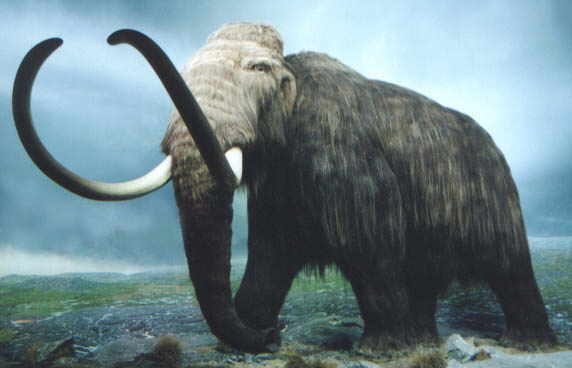
 Three species of Mammoths (genus Mammuthus) lived on the mainland of the United States at the end of the last Ice Age. These were the Columbian mammoth (M. columbi), Jefferson's mammoth (M. jeffersonii), and the woolly mammoth (M. primigenius). Of these, Jefferson's mammoth and the woolly mammoth have been identified from the midwestern U.S.
Mammoths, mastodones and modern elephants, are members of the order Proboscidea. The mammoths are closely related to the living elephants, especially to the Asiatic elephant (Elephas maximus).
As adults these late-occuring mammoths stood between about 3 and 3.7 meters (10-12 feet) at the shoulder and weighed between 5500 and 7300 kilograms (6-8 tons).
Mammoth Teeth
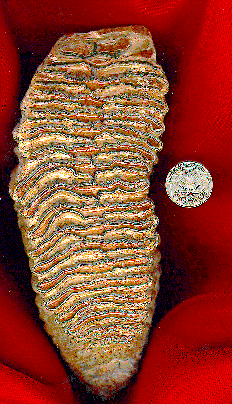 The teeth of mammoths are quite distinctive. They are composed of a set of compressed enamel plates that are held together with cementum. These cemented plates make a very tall, strong, and wear-resistant tooth. After a tooth erupts from the gum cavity, the mammoth uses it in grinding coarse vegetation like grass. This use causes the tooth to develop a flat top with low enamel ridges where the plates have been worn.
The tall structure of these hypsodont (shallow-rooted) teeth make them very resistant to wear. This is important because mammoths are thought to have been primarily grass-eaters. Grass is a very hard material to eat. It has small pieces of silica (a glass-like substance) in its leaves. These pieces of silica act like sandpaper grit and would wear away a less resistant tooth very quickly.
Mammoths are frequently found as fossils in the midwestern U.S. Most often isolated teeth are found. Mammoth fossils are most common in areas that were covered by savannas, grasslands, or tundra during the last Ice Age. This map shows some of the important mammoth finds in the region.

No comments:
Post a Comment