Thursday, January 13, 2011

Common Phobias!!!! Are you feared!!!

Number 1: Fear of Heights

Do you have a fear of heights? If so, then you’re one of the millions of people worldwide who suffer from this fear one way or another. In fact, its so common that almost everyone has been affected by it at some stage in their lives & this is why it makes it to the top of our common phobias list. Most people who are affected by the fear of heights phobia will instinctively avoid all places where height is involved. Some will have a severe form of this phobia and will even avoid going up a few feet on a ladder. 

The thing is that you can get by without this fear having a major impact on your life. This is the reason why so many just live with it. However, wouldn’t it be better to just rid yourself of this fear once and for all? Wouldn’t life be far better without having to make excuses to your friends that you can’t go because you know there’s height involved. Wouldn’t it be so much easier to just get on a plane without worrying about being so far up in the sky? Being afraid of heights doesn’t have to complicate your life. You can overcome the fear of heights in only a few weeks just by listening to subliminal messages twice a day.


Number 2: Fear of Flying


The fear of flying phobia, also known as Aerophobia is one of the mostcommon phobias and affects many of us on a daily basis. Most people don’t like being confined in a metal tube miles above the earth while others are more afraid of the plane crashing. Whatever th
e reason for this fear, there’s one thing for sure and that is, its very disruptive for the traveler. There are many people who wont set foot on a plane, they’ll take the boat instead. Imagine traveling to America from Europe in a boat, can you believe some people do this so that they wont have to get on a plane. It may sound ridiculous to some but to the person who has this phobia, its quite natural. Flying without fear is a goal which most people who suffer from this phobia think they'll never succeed to do.

Number 3: Fear of Public Speaking


Its easy to see why this fear has made it into our common phobias list.We’ve all been there at some stage of our lives, whether its a speech you had to make at work or a wedding speech, you had to stand up in front of many people and talk, its one of our most common fears. Its a worst case scenario for many people, they worry about making a fool of themselves, they worry that they’ll get it all wrong
 and everyone will start talking about them. This couldn’t be further from the truth. This phobia is very common and so it goes without saying that most of the people in the audience are also affected by it. What this means is that everyone in the audience supports you, they want you to succeed & no one is going to laugh when if you make a cock up. 


Just think about it for a second, do you watch those quizzes on TV, the contestant is on the million dollar question, the pressure is immense. Do you want this person to get the question wrong? Of course you don’t! You want the contestant to get the question right and walk away with the million. This is human nature, people will want you to succeed and this is the same when it comes to public speaking, they’re all supporting you. However, sometimes this isn’t enough for some people who are affected by this phobia. If you want to know how to overcome your fear of public speaking then listening to Subliminal tapes can significantly reduce any fear you may have about public speaking. Try it for a few weeks before you must give your speech and you’ll be pleasantly surprised.

Number 5: Fear of Snakes

The fear of snakes is a very common phobia and its not too hard to see why its high up in our common phobias list. Snakes are common throughout the world & live in almost all countries except for Ireland, Greenland, Iceland & New Zealand. So, if you want to avoid snakes then you’re going to have to live in a country like Ireland for example. 


The weird thing about this phobia though, is that there are many people from these countries who also have this fear. They come from the 4 known countries in the world that don’t have snakes but they are still terrified of them. 


So, this phobia is more in the psyche than anything else & can be cured if you take the time out to do something about it. By listening to positive affirmations for around 14 days, you can significantly reduce your fear of snakes.


Number 6: Fear of Spiders

The fear of spiders is close to the top of our common phobias list. This phobia, known as arachnophobia is usually in the domain of women as 50% of them are terrified of spiders while only 10% of men are affected. The extent of this phobia can vary with some people having a mild form of this fear while others will panic even if they see a picture of a spider. 


This fear is completely irrational as the vast majority of spiders in the western world are completely harmless. However this fact doesn’t seem to matter to anyone who is affected by this phobia. They will panic if they come across a spider in their bathroom and will usually have to get someone else to remove it. For most, this phobia wont really have a major effect on their life but its still a nuisance all the same. For some, it can be life altering as they spend most of their time worrying about where the next spider is going to come from. For these people, hypnotherapy is a viable option. Just listening to some recordings for a few weeks twice a day can have a major effect on this phobia.

Mammoths!!!


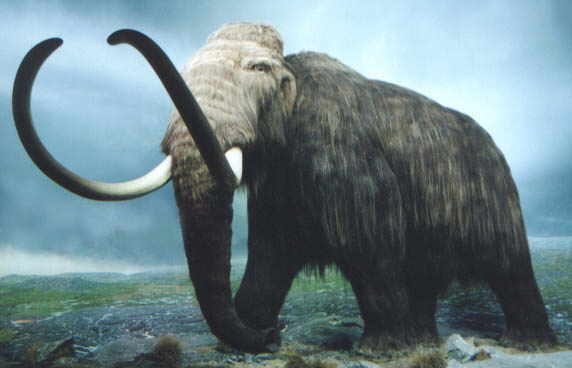
Three species of Mammoths (genus Mammuthus) lived on the mainland of the United States at the end of the last Ice Age. These were the Columbian mammoth (M. columbi), Jefferson's mammoth (M. jeffersonii), and the woolly mammoth (M. primigenius). Of these, Jefferson's mammoth and the woolly mammoth have been identified from the midwestern U.S.
Mammoths, mastodones and modern elephants, are members of the order Proboscidea. The mammoths are closely related to the living elephants, especially to the Asiatic elephant (Elephas maximus).
As adults these late-occuring mammoths stood between about 3 and 3.7 meters (10-12 feet) at the shoulder and weighed between 5500 and 7300 kilograms (6-8 tons).

Mammoth Teeth


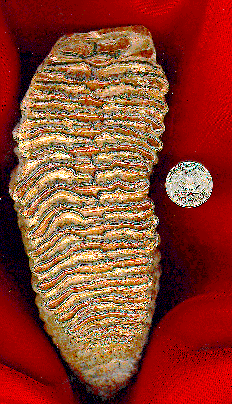
The teeth of mammoths are quite distinctive. They are composed of a set of compressed enamel plates that are held together with cementum. These cemented plates make a very tall, strong, and wear-resistant tooth. After a tooth erupts from the gum cavity, the mammoth uses it in grinding coarse vegetation like grass. This use causes the tooth to develop a flat top with low enamel ridges where the plates have been worn.
The tall structure of these hypsodont (shallow-rooted) teeth make them very resistant to wear. This is important because mammoths are thought to have been primarily grass-eaters. Grass is a very hard material to eat. It has small pieces of silica (a glass-like substance) in its leaves. These pieces of silica act like sandpaper grit and would wear away a less resistant tooth very quickly.
Mammoths are frequently found as fossils in the midwestern U.S. Most often isolated teeth are found. Mammoth fossils are most common in areas that were covered by savannas, grasslands, or tundra during the last Ice Age. This map shows some of the important mammoth finds in the region.

Tuesday, January 11, 2011

Dinosaurs !!!

Dinosaurs are a diverse group of animals that were the dominant terrestrial vertebrates for over 160 million years, from the late Triassic period (about 230 million years ago) until the end of the Cretaceous (about 65 million years ago). The extinction of most dinosaur species occurred during the Cretaceous–Tertiary extinction event. The fossil record indicates that birds evolved from theropod dinosaurs during the Jurassic period. Some of them survived the Cretaceous–Tertiary extinction event, including the ancestors of all modern birds. Consequently, in modern classification systems, birds are considered a type of dinosaur — the only group of which that has survived to the present day.
Dinosaurs are a diverse and varied group of animals; birds, at over 9,000 species, are the most diverse group of vertebrate besides perciform fish.Paleontologists have identified over 500 distinct genera and more than 1,000 different species of non-avian dinosaurs. Dinosaurs are represented on every continent by both extant species and fossil remains. Some dinosaurs are or were herbivorous, others carnivorous. Some have been bipedal, others quadrupedal, and others have been able to shift between these body postures. Many non-avian species developed elaborate skeletal modifications such as bony armor, horns or crests. Avian dinosaurs have been the planet's dominant flying vertebrate since the extinction of the pterosaurs. Although generally known for the large size of some species, most dinosaurs were human-sized or even smaller. Most groups of dinosaurs are known to have built nests and laid eggs.
The term "dinosaur" was coined in 1842 by the English paleontologist Richard Owen, and derives from Greek δεινός (deinos) "terrible, powerful, wondrous" + σαῦρος (sauros) "lizard". Through the first half of the twentieth century, most of the scientific community believed dinosaurs to have been sluggish, unintelligent cold-blooded animals. Most research conducted since the 1970s, however, has indicated that dinosaurs were active animals with elevated metabolisms and numerous adaptations for social interaction.
Since the first dinosaur fossils were recognized in the early nineteenth century, mounted dinosaur skeletons have been major attractions at museums around the world, and dinosaurs have become a part of world culture. They have been featured in best-selling books and films such as Jurassic Park, and new discoveries are regularly covered by the media. In informal speech, the word "dinosaur" is used to describe things that are impractically large, slow-moving, obsolete, or bound for extinction, reflecting the outdated view that dinosaurs were maladapted monsters of the ancient world.
What killed them??

Flying reptiles near the point of impact of a large asteroid, this may have contributed to the extinction of the dinosaurs The Cretaceous-Tertiary mass extinction - also known as the K/T extinction - is famed for the death of the dinosaurs. However, many other organisms perished at the end of the Cretaceous including the ammonites, many flowering plants and the last of the pterosaurs. Some groups had been in decline for several million years before the final event that destroyed them all. It's suggested that the decline was due to flood basalt eruptions affecting the world's climate, combined with drastic falls in sea level. Then a huge asteroid or comet struck the seabed near the Yucatan Peninsula in Mexico and was the straw that broke the camel's back.

Volcanoes!!!

Volcanoes are awesome manifestations of the fiery power contained deep within the Earth. These formations are essentially vents on the Earth's surface where molten rock, debris, and gases from the planet's interior are emitted.
When thick magma and large amounts of gas build up under the surface, eruptions can be explosive, expelling lava, rocks and ash into the air. Less gas and more viscous magma usually mean a less dramatic eruption, often causing streams of lava to ooze from the vent.
Photo: Activity at Cleveland Volcano, Aleutian Islands, AlaskaThe mountain-like mounds that we associate with volcanoes are what remain after the material spewed during eruptions has collected and hardened around the vent. This can happen over a period of weeks or many millions of years.
A large eruption can be extremely dangerous for people living near a volcano. Flows of searing lava, which can reach 2,000 degrees Fahrenheit (1,250 degrees Celsius) or more, can be released, burning everything in its path, including whole towns. Boulders of hardening lava can rain down on villages. Mud flows from rapidly melting snow can strip mountains and valleys bare and bury towns. Ash and toxic gases can cause lung damage and other problems, particularly for infants and the elderly. Scientists estimate that more than 260,000 people have died in the past 300 years from volcanic eruptions and their aftermath.
Volcanoes tend to exist along the edges between tectonic plates, massive rock slabs that make up Earth's surface. About 90 percent of all volcanoes exist within the Ring of Fire along the edges of the Pacific Ocean.
About 1,900 volcanoes on Earth are considered active, meaning they show some level of activity and are likely to explode again. Many other volcanoes are dormant, showing no current signs of exploding but likely to become active at some point in the future. Others are considered extinct.

tornadoes !!!!!


Although tornadoes occur in many parts of the world, these destructive forces of nature are found most frequently in the United States east of the Rocky Mountains during the spring and summer months. In an average year, 800 tornadoes are reported nationwide, resulting in 80 deaths and over 1,500 injuries. A tornado is defined as a violently rotating column of air extending from a thunderstorm to the ground. The most violent tornadoes are capable of tremendous destruction with wind speeds of 250 mph or more. Damage paths can be in excess of one mile wide and 50 miles long. Once a tornado in Broken Bow, Oklahoma, carried a motel sign 30 miles and dropped it in Arkansas!


Tornado Variations


  • Some tornadoes may form during the early stages of rapidly developing thunderstorms. This type of tornado is most common along the front range of the Rocky Mountains, the Plains, and the Western States.
  • Tornadoes may appear nearly transparent until dust and debris are picked up.
  • Occasionally, two or more tornadoes may occur at the same time.


Waterspout


  • Waterspouts are weak tornadoes that form over warm water.
  • Waterspouts are most common along the Gulf Coast and southeastern states. In the western United States, they occur with cold late fall or late winter storms, during a time when you least expect tornado development.
  • Waterspouts occasionally move inland becoming tornadoes causing damage and injuries.

How Do Tornadoes Form?


Before thunderstorms develop, a change in wind direction and an increase in wind speed with increasing height creates an invisible, horizontal spinning effect in the lower atmosphere


Rising air within the thunderstorm updraft tilts the rotating air from horizontal to vertical.


An area of rotation, 2-6 miles wide, now extends through much of the storm. Most strong and violent tornadoes form within this area of strong rotation


Woodward OK (Ron Przybylinski)
A lower cloud base in the center of the photograph identifies an area of rotation known as a rotating wall cloud. This area is often nearly rain-free. Note rain in the background.


Woodward OK (Ron Przybylinski)


Moments later a strong tornado develops in this area. Softball-size hail and damaging "straight-line" winds also occurred with this storm.


.

The Big Bang !!!

One of the most persistently asked questions has been: How was the universe created? Many once believed that the universe had no beginning or end and was truly infinite. Through the inception of the Big Bang theory, however,no longer could the universe be considered infinite. The universe was forced to take on the properties of a finite phenomenon, possessing a history and a beginning. 


About 15 billion years ago a tremendous explosion started the expansion of the universe. This explosion is known as the Big Bang. At the point of this event all of the matter and energy of space was contained at one point. What exisisted prior to this event is completely unknown and is a matter of pure speculation. This occurance was not a conventional explosion but rather an event filling all of space with all of the particles of the embryonic universe rushing away from each other. The Big Bang actually consisted of an explosion of space within itself unlike an explosion of a bomb were fragments are thrown outward. The galaxies were not all clumped together, but rather the Big Bang lay the foundations for the universe. 
The 'ghost' of the Big Bang

The origin of the Big Bang theory can be credited to Edwin Hubble. Hubble made the observation that the universe is continuously expanding. He discovered that a galaxys velocity is proportional to its distance. Galaxies that are twice as far from us move twice as fast. Another consequence is that the universe is expanding in every direction. This observation means that it has taken every galaxy the same amount of time to move from a common starting position to its current position. Just as the Big Bang provided for the foundation of the universe, Hubbles observations provided for the foundation of the Big Bang theory. 
Since the Big Bang, the universe has been continuously expanding and, thus, there has been more and more distance between clusters of galaxies. This phenomenon of galaxies moving farther away from each other is known as the red shift. As light from distant galaxies approach earth there is an increase of space between earth and the galaxy, which leads to wavelengths being stretched. 


In addition to the understanding of the velocity of galaxies emanating from a single point, there is further evidence for the Big Bang. In 1964, two astronomers, Arno Penzias and Robert Wilson, in an attempt to detect microwaves from outer space, inadvertently discovered a noise of extraterrestrial origin. The noise did not seem to emanate from one location but instead, it came from all directions at once. It became obvious that what they heard was radiation from the farthest reaches of the universe which had been left over from the Big Bang. This discovery of the radioactive aftermath of the initial explosion lent much credence to the Big Bang theory. 


Even more recently, NASAs COBE satellite was able to detect cosmic microwaves eminating from the outer reaches of the universe. These microwaves were remarkably uniform which illustrated the homogenity of the early stages of the universe. However, the satillite also discovered that as the universe began to cool and was still expanding, small fluctuations began to exist due to temperature differences. These flucuatuations verified prior calculations of the possible cooling and development of the universe just fractions of a second after its creation.


The Big Bang theory provides a viable solution to one of the most pressing questions of all time. It is important to understand, however, that the theory itself is constantly being revised. As more observations are made and more research conducted, the Big Bang theory becomes more complete and our knowledge of the origins of the universe more substantial.